
Case Study
Bite Correction with Adaptive Orthodontics
When a well-aligned childhood smile changes with growth
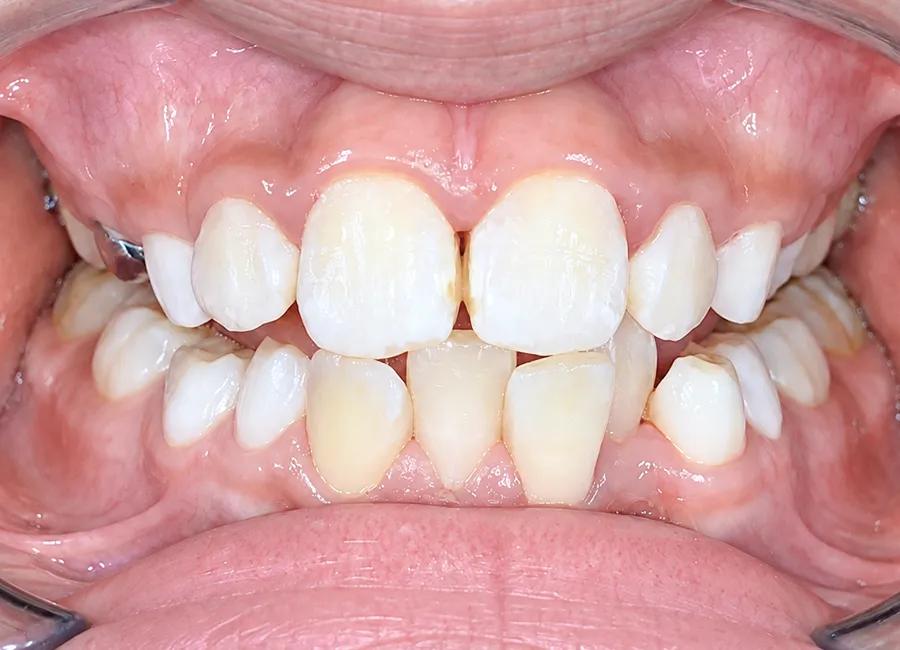
Concern:
At age four, the patient’s smile appeared well aligned, but as he grew, changes in his teeth and jaws affected how his upper and lower teeth fitted together.
Treatment:
Treatment combined an Advansync2 bite jumper with upper and lower fixed braces to address his bite and tooth alignment. As his treatment needs evolved, a fixed bite-correction appliance was introduced to continue improving his bite.
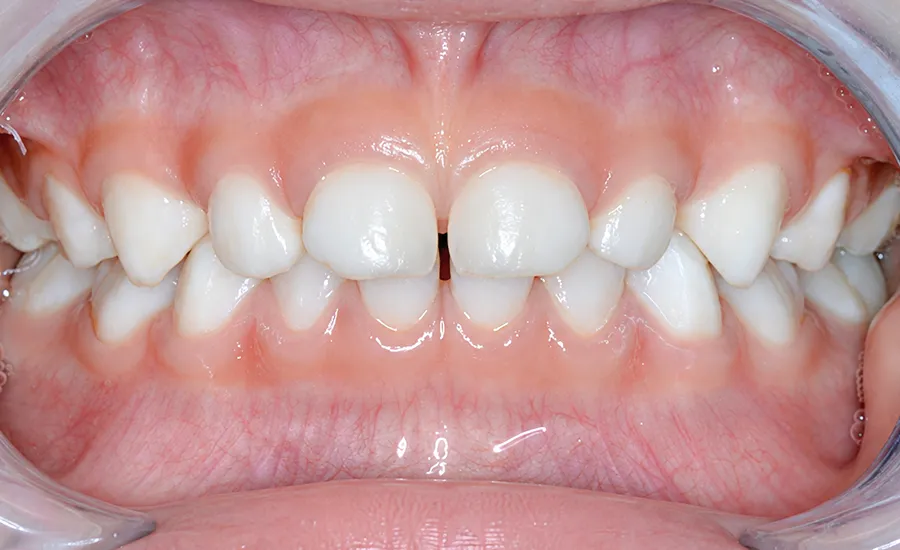
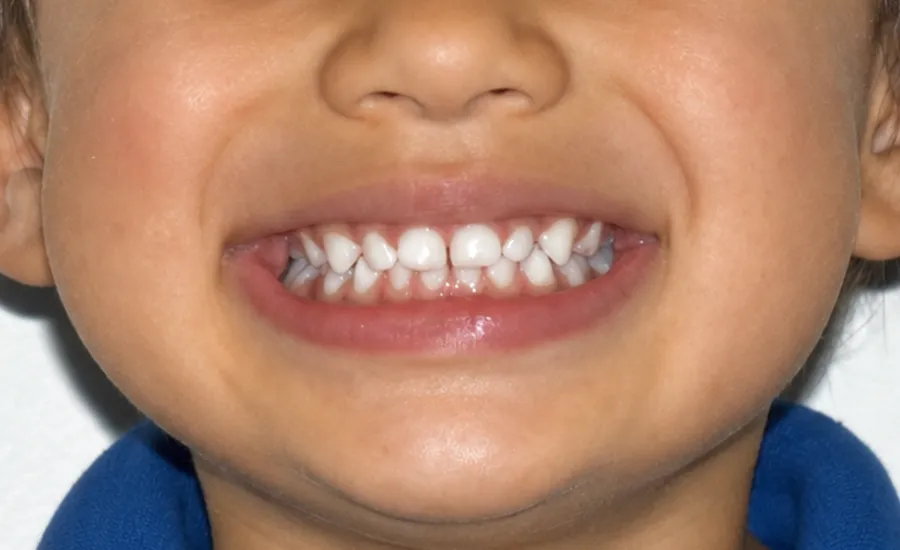
Straight teeth at age four
As a four year old, this patient had what appeared to be a well-aligned and balanced set of teeth.
There were no known habits affecting his tooth or jaw development. He had also had his tonsils and adenoids removed at age four, a procedure that can help address breathing difficulties that may affect how a child’s jaws develop.
At the time, there were no obvious signs that significant orthodontic treatment would later be required. However, tooth and jaw development can continue to change considerably throughout childhood and adolescence.
How his bite changed over time
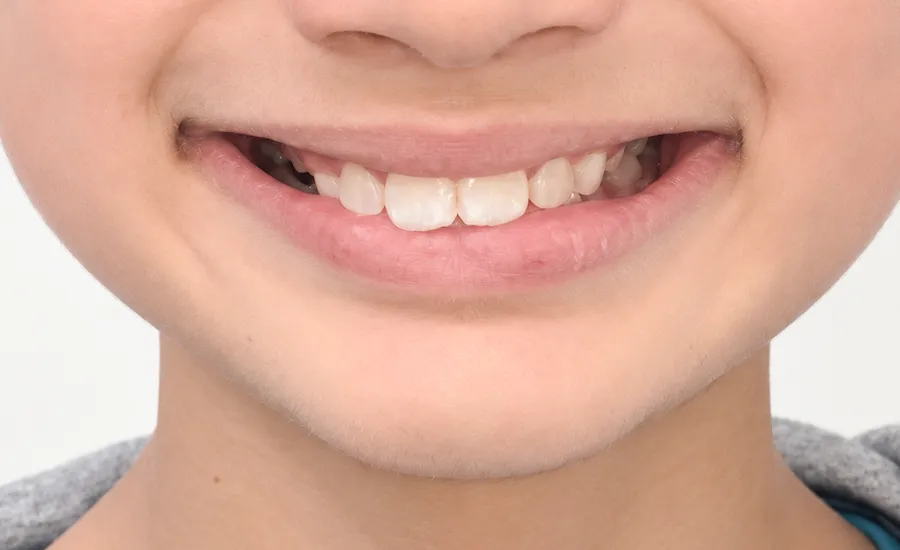
By around age 10, his teeth and jaws had developed in a way that affected how his upper and lower teeth fitted together.
This highlights an important aspect of orthodontic development: a child who appears to have well-aligned teeth at an early age may still develop alignment or bite concerns as the jaws grow and the permanent teeth emerge.
As the patient’s orthodontic needs became more apparent, a comprehensive treatment approach was planned to address both the developing bite relationship and the alignment of the upper and lower teeth.
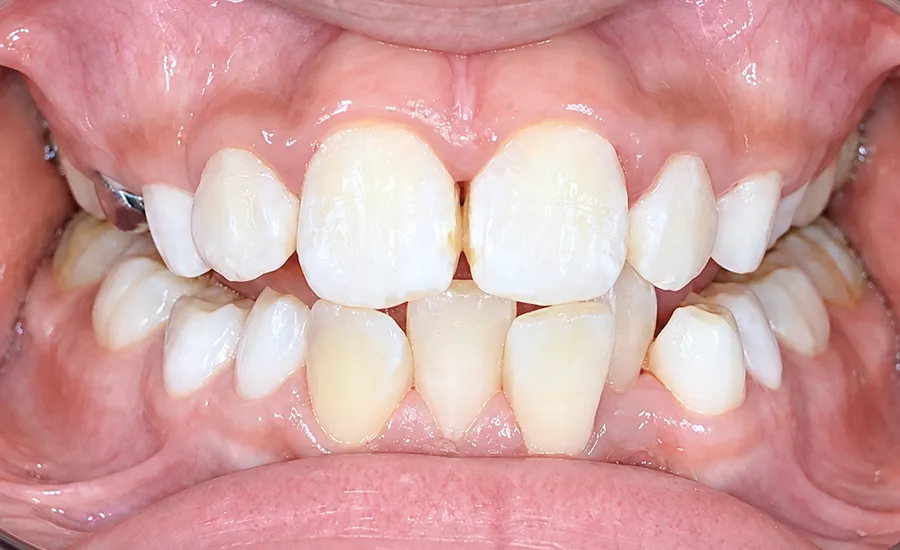
Planning treatment around growth and development
Orthodontic treatment was designed to address the patient’s developing malocclusion while also improving the alignment of both dental arches.
The treatment plan included:
- Bite correction using an Advansync2 bite jumper
- Comprehensive upper braces
- Comprehensive lower braces
- Ongoing adjustments and monitoring throughout treatment
- Elastic wear as part of the orthodontic treatment plan
The aim was to improve the relationship between the upper and lower teeth while gradually bringing both arches into improved alignment.
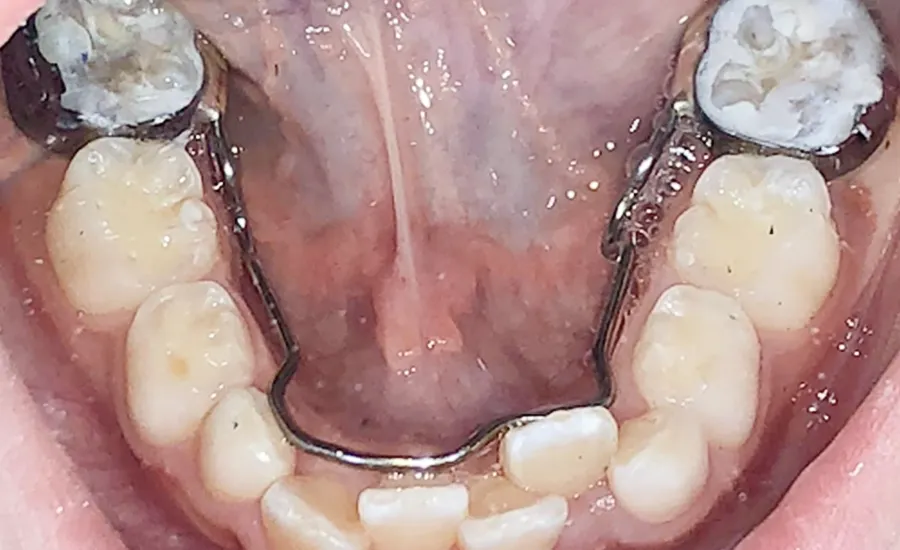
Correcting the bite while aligning both arches
Treatment began with a bite-correction approach using an Advansync2 appliance, followed by comprehensive orthodontic treatment with fixed braces.
As treatment progressed, the upper and lower teeth were gradually guided into improved positions.
Elastic wear also formed an important part of treatment. However, consistent elastic wear can play a significant role in achieving planned orthodontic movements and bite correction.
Because elastic wear was inconsistent during part of treatment, the overall treatment time needed to be extended.
Midway through treatment, the approach to bite correction was also adjusted, with the patient transitioning to a fixed bite jumper to continue addressing the bite relationship.
This allowed treatment to progress while maintaining a comprehensive focus on both bite correction and overall tooth alignment.
When treatment needs to adapt along the way
Orthodontic treatment does not always follow a perfectly predictable path.
While the original treatment plan provides a roadmap, individual tooth movement, growth and patient cooperation can all influence how treatment progresses.
In this case, inconsistent elastic wear meant that the planned treatment approach needed to be adjusted.
Transitioning to a fixed bite jumper provided an alternative method of continuing bite correction without relying solely on removable elastic wear.
The case demonstrates the importance of ongoing monitoring and adapting orthodontic treatment when circumstances change.
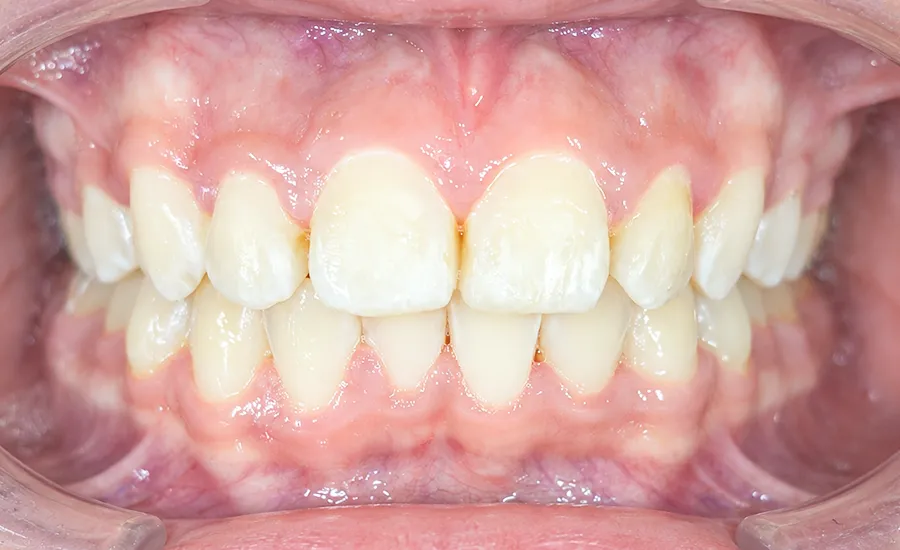
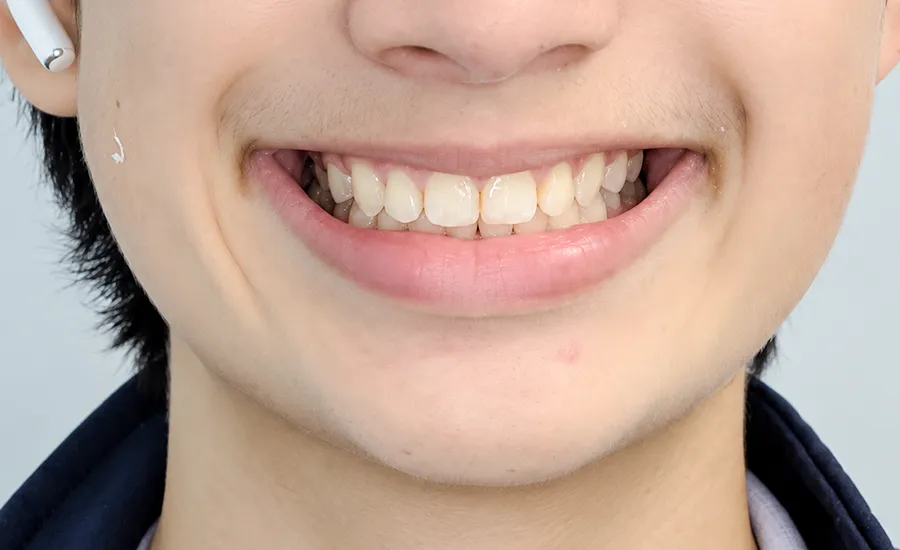
Two years of gradual change
The patient’s orthodontic treatment took just over 2 years to complete.
Although treatment took longer than originally anticipated due to inconsistent elastic wear, the comprehensive approach allowed the orthodontic plan to continue progressing towards improved bite relationships and tooth alignment.
By the completion of treatment at age 15, significant changes had been achieved across both the upper and lower arches.
The case demonstrates how orthodontic treatment can address concerns that develop gradually during childhood and adolescence, even when early dental development initially appears well aligned.
Why monitor orthodontic development as children grow
Straight teeth today don’t necessarily mean a well-aligned bite tomorrow. As this case demonstrates, a child’s teeth and jaws can change considerably as they grow, even when their early dental development appears well aligned.
Regular dental and orthodontic assessments can help identify developing crowding, spacing or bite concerns and determine whether treatment may be appropriate.
Every child’s orthodontic needs are different. At Alma Dental Surgery, we assess tooth development, jaw growth, bite alignment and oral health to recommend treatment options tailored to each patient’s individual needs.
* Treatment outcomes vary depending on individual oral health, clinical conditions, growth and development, treatment needs, patient cooperation and biological response. A comprehensive assessment by a qualified dental professional is required to determine suitable treatment options.