
Case Study
Starting braces at 79 years of age
Orthodontic alignment and veneer enhancement for peg laterals later in life.
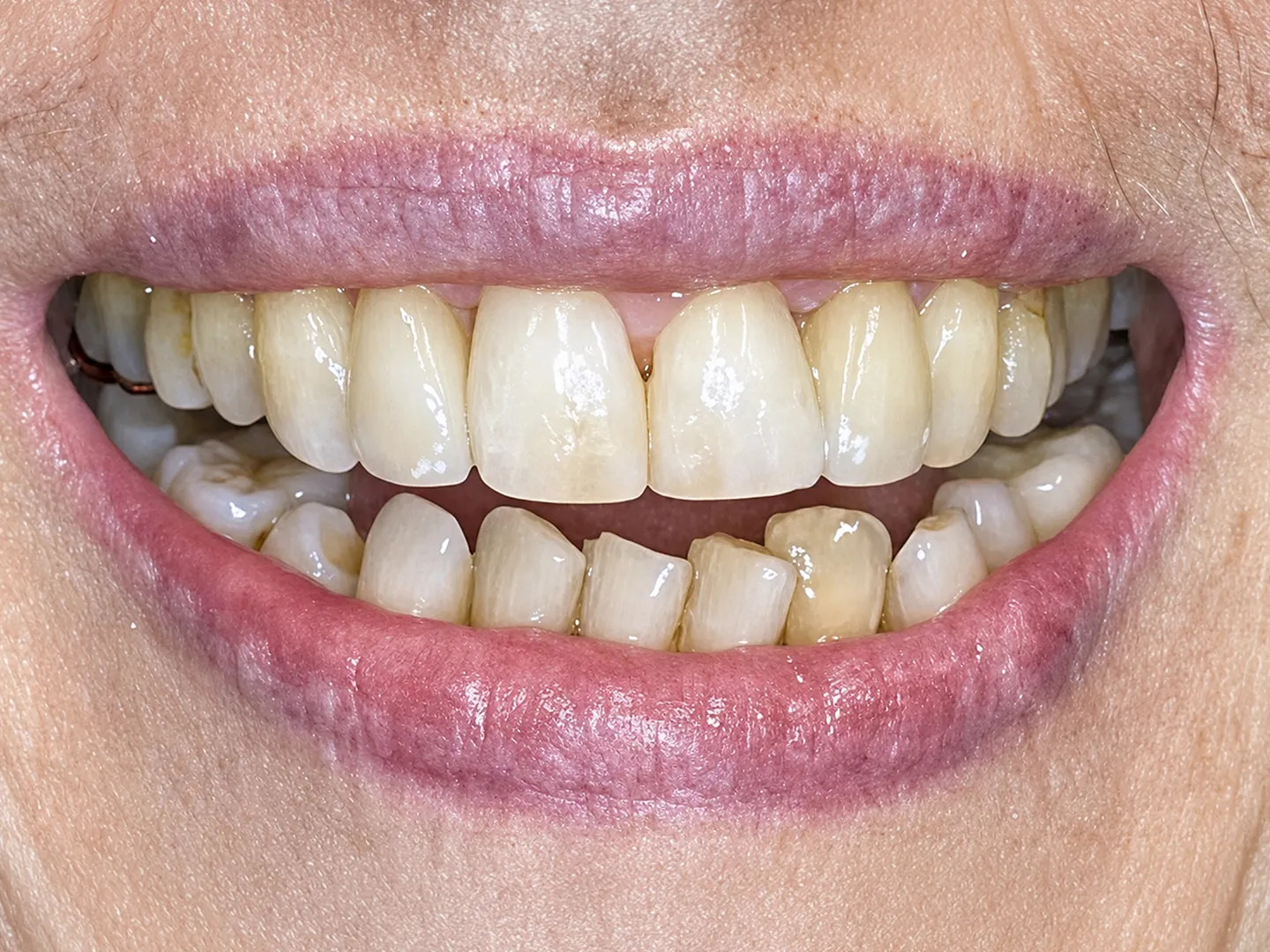
Deborah’s concerns
When Deborah attended the practice at 79 years of age, she was looking for ways to improve the appearance of her smile. She was particularly concerned about the shape and proportions of her upper front teeth, which had affected her confidence when smiling.
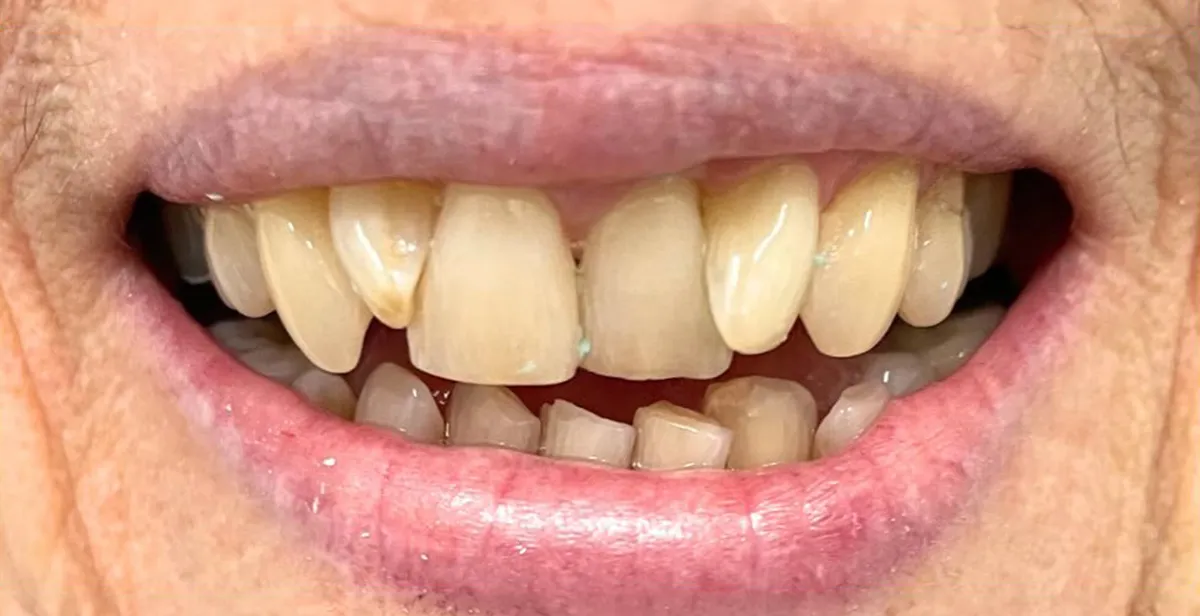
Examination revealed that Deborah had naturally smaller upper lateral incisors, commonly known as “peg laterals”. These teeth are typically narrower and smaller than average, which can affect the overall balance and symmetry of the smile. Mild crowding and alignment concerns in the upper teeth were also present, contributing to uneven spacing and an irregular appearance.
Deborah wished to explore treatment options that would enhance the appearance of her smile while maintaining a conservative approach that preserved as much natural tooth structure as possible.
Comprehensive assessment
Comprehensive clinical and radiographic assessments were completed to evaluate Deborah’s oral health, tooth positioning, and suitability for treatment.
Key findings included:
- Congenitally small upper lateral incisors (teeth 12 and 22)
- Upper anterior crowding and misalignment
- Healthy supporting structures suitable for orthodontic treatment
- A desire for improved smile aesthetics with minimal intervention
The assessment indicated that restorative treatment alone would not provide the most balanced outcome. Improving tooth position before enhancing tooth shape would allow for a more harmonious and conservative result.
Developing a personalised treatment plan
Following a detailed discussion regarding treatment options, benefits, limitations, and expected outcomes, a staged treatment plan was developed.
The proposed approach involved:
- Upper fixed orthodontic treatment to align the upper teeth and create appropriate spacing for restorative work.
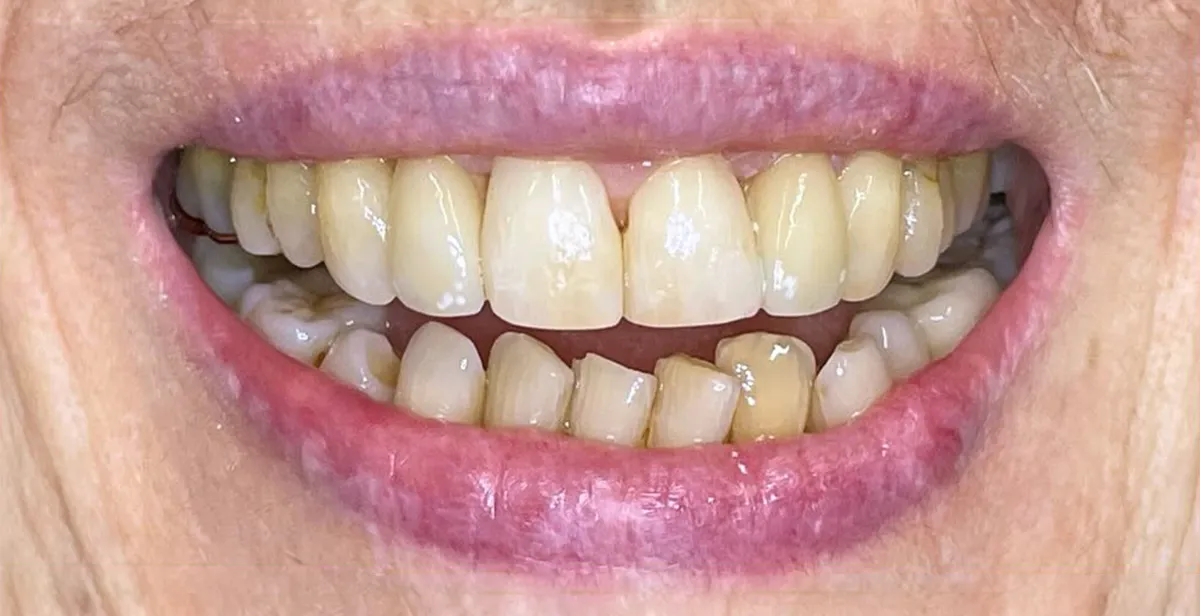
- Porcelain veneers on teeth 12 and 22 to improve the size, shape, and symmetry of the peg laterals once orthodontic treatment had been completed.
This interdisciplinary approach aimed to optimise both function and aesthetics while preserving as much natural tooth structure as possible.
Creating space with upper braces
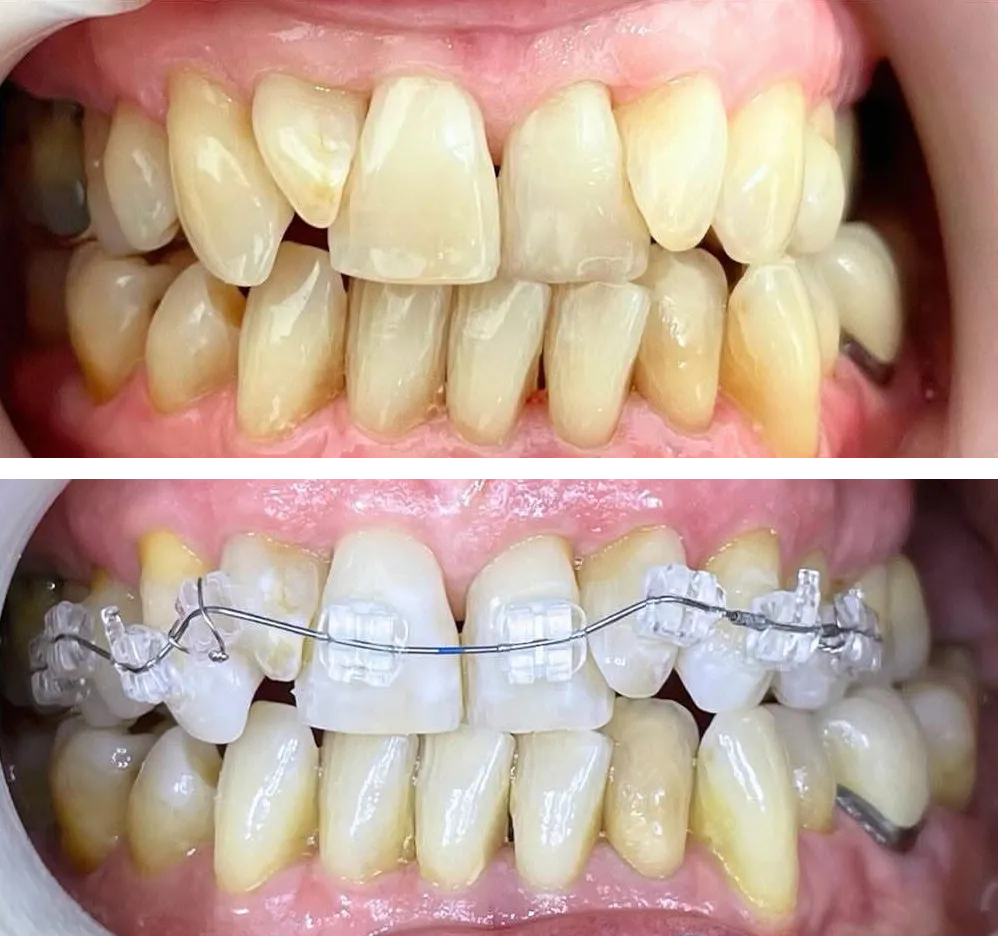
Upper fixed braces were placed to gradually reposition the teeth into a more favourable alignment.
Orthodontic treatment served several important purposes:
- Improving the alignment of the upper teeth
- Establishing appropriate space around the lateral incisors
- Enhancing overall smile symmetry
- Creating an ideal foundation for the planned veneers
The treatment progressed under regular review appointments to monitor tooth movement and ensure the teeth were responding appropriately.
Deborah adapted well to orthodontic treatment and remained committed throughout the process.
Refining the shape of the front teeth
Once the orthodontic objectives had been achieved, attention turned to the appearance of the peg laterals.
Two porcelain veneers were placed on teeth 12 and 22 to improve their:
- Width and overall proportions
- Shape and contour
- Integration with the adjacent natural teeth
- Contribution to overall smile balance
The veneers were carefully designed to complement Deborah’s facial features and existing dentition, aiming for a natural and age-appropriate appearance.
Deborah’s outcome
The final result reflected the benefits of a carefully planned, staged approach. By combining orthodontic alignment with conservative porcelain veneers, Deborah’s treatment addressed both tooth position and tooth shape as part of a carefully planned, staged approach.
Aligning the teeth before placing the veneers created the space needed to improve the proportions and symmetry of the peg laterals while preserving as much natural tooth structure as possible. The final result provided a more balanced and harmonious smile that aligned with Deborah’s treatment goals.
Personalised care at any age
Deborah’s case demonstrates that orthodontic treatment may be an option for some older adults. Treatment suitability is determined on an individual basis and depends on factors such as oral health, treatment objectives, and overall clinical findings.
By addressing tooth position before restorative treatment, it was possible to achieve a balanced result using a conservative approach.
* This case study describes the treatment provided for one individual patient. Outcomes vary between patients based on factors including oral health status, clinical presentation, treatment objectives, compliance with recommendations, and biological response to treatment. A comprehensive assessment by a qualified dental professional is necessary to determine the most appropriate treatment options for each individual.